How to use this page
Aurora Hunter keeps aurora weather, space weather, and trip-planning essentials in one place so you can move from forecast to booking faster.
1) Check the sky
Check active space weather conditions to see if the aurora is dancing.
2) Pick a destination
Choose a destination to check 10-day forecasts for darkness and clear skies.
3) Plan the basics
Discover top-rated hotels, tours, and local tips to book your trip.
Real-time Space Weather Snapshot
Latest solar wind, IMF, and hemispheric power from NOAA
Loading...
Auroral oval (30 min forecast)
Loading...
Aurora Probability (30 min)
--%
Moon Phase
Loading...
Solar Wind Speed
-- km/s
Solar Wind Density
-- cm‑3
IMF Bz
-- nT
IMF Bt
-- nT
Kp
--
Hemispheric Power
-- GW
Choose Your Destination
Explore weather, moon phases, and local recommendations
FAQ
What Is the Aurora Borealis?
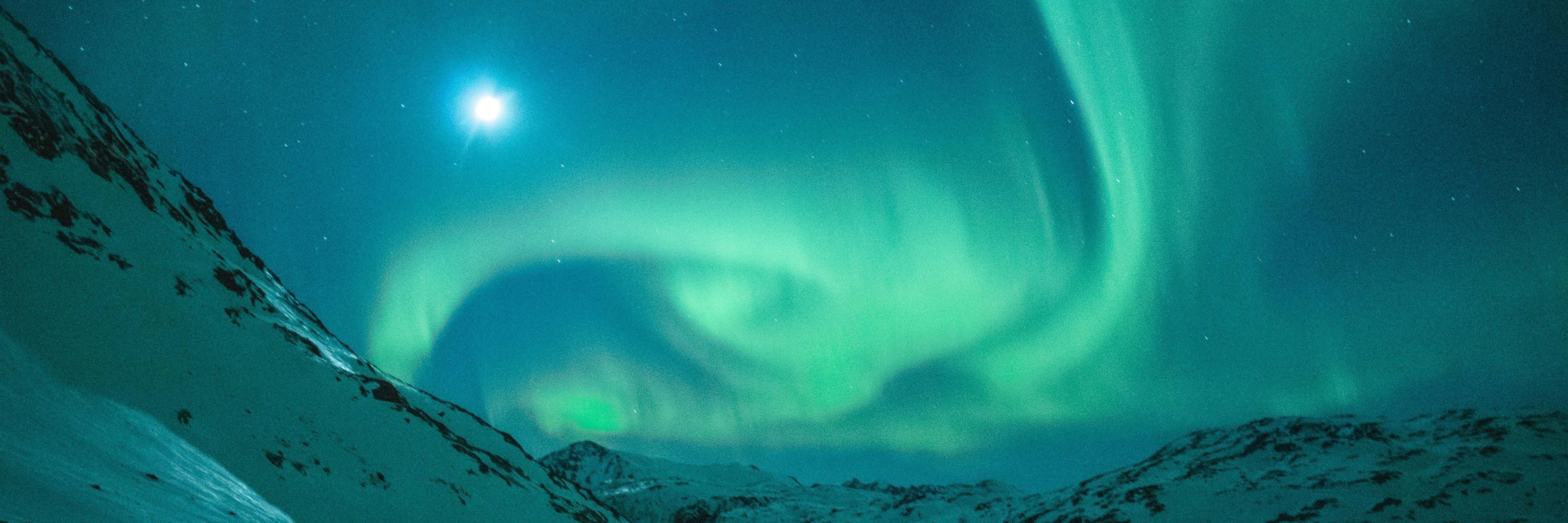
Auroras are light shows caused by charged solar particles funneled by Earth’s magnetic field into the upper atmosphere, where they collide with oxygen and nitrogen and emit colors (mostly green, plus reds/blues). read more
When are auroras most likely?
Look for Kp 3+ and sustained negative Bz, with clear, dark skies. Higher magnetic latitude lowers the Kp needed.
How many nights should I plan?
Plan 3–5 nights to ride out clouds and catch at least one active night. More nights increase your odds.
What time should I watch?
Prime hours are typically 21:00–02:00 local, but strong storms can appear earlier or later. Stay flexible.
Does moonlight matter?
Yes. Dark phases (new/crescent) improve contrast. Full/gibbous moon can wash out faint auroras.
What about clouds?
Low cloud cover is ideal. Check the 10-day cloud forecast and be ready to drive to clearer spots.
Why are there only a few famous aurora spots?
They combine high magnetic latitude (close to the oval), frequent clear nights, good winter accessibility, and tourism infrastructure (lodging, guides, transport). Other places can see auroras during strong storms, but these hubs offer the most reliable conditions and services.